PLA & 3D printing
Every Twiddly3D spinner and accessory is 3D printed in PLA, one thin layer at a time. Here is what that means for the piece on your desk.
- Material
- PLA (polylactic acid)
- Layer height
- 0.2 mm
- Layers in one spinner
- about 75
- Supports
- None, frame and rotor print together
- Softens at
- about 55 °C
- Magnets
- Neodymium discs, pressed in and glued
What is PLA?
PLA, short for polylactic acid, is a plastic made from plant starch, usually corn or sugarcane. The sugars are fermented into lactic acid, which is then joined into long chains and sold as a thin filament on a spool. It is the most common material for desktop 3D printing.
We chose it for a few reasons:
- It prints precisely. PLA barely shrinks or warps as it cools, which matters when the rotor has to turn on cones with only a few tenths of a millimetre of play.
- It is stiff. Frames keep their shape and the pivots stay true, so the click feels the same after months of flipping.
- The colour goes all the way through. Nothing is painted on, so a scratch never shows a different colour underneath.
- It comes translucent too. Printed in layers, our translucent PLA looks frosted rather than glassy, and the light catches the magnets inside.
Is PLA eco-friendly?
It is made from plants rather than oil, which is a good start. But we would rather be straight with you than sell it as greener than it is:
- PLA only breaks down in industrial composting, at high heat. In a garden compost heap, a landfill or the sea it lasts for many years, like other plastics.
- Most household recycling does not accept it.
- A spinner also contains magnets, so it should never go in compost. Keep it, pass it on, or take it to a collection point for small electronics and metal.
The most sustainable spinner is the one you keep using for years, so we design them to last.
How 3D printing works
Our printers work by melting PLA filament in a hot nozzle and drawing each slice of the model with a fine line of plastic. When a slice is done, the printer moves up 0.2 mm and draws the next one on top. A 15 mm tall spinner is built from about 75 of these layers.
The rotor is not put in afterwards. It is printed together with the frame, already sitting on its two pivot cones, with a gap of 0.5 mm at the sides so the two never fuse. That is why there is nothing to assemble and nothing to come apart. After printing, each magnet is pressed to the bottom of its pocket and glued, with the polarity checked first.
Because no mould is needed, we can offer 14 surface patterns and a long list of accessories, and improve a design the moment we find something better.
What you will notice
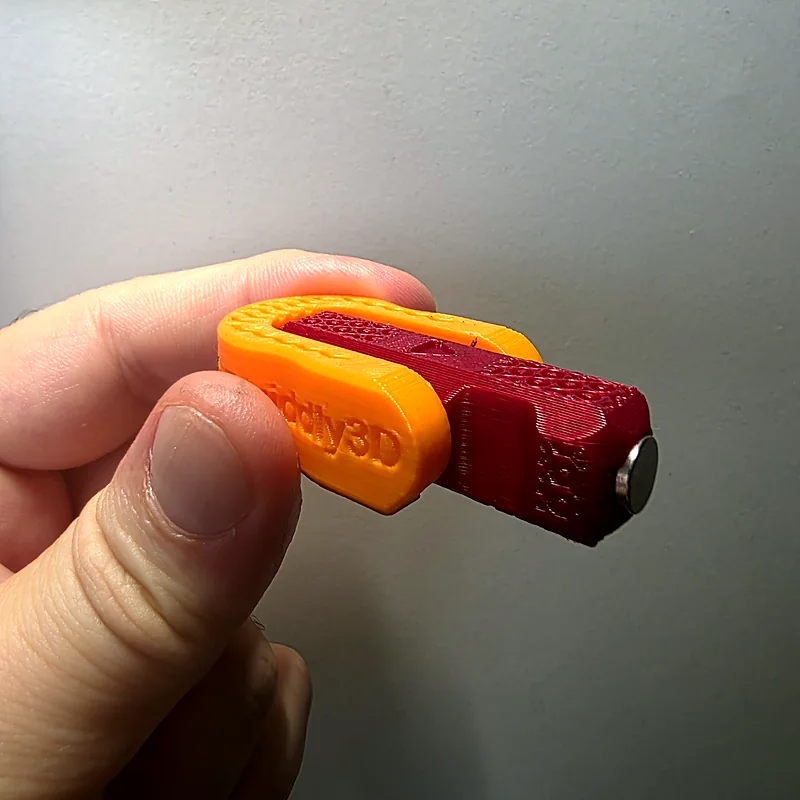
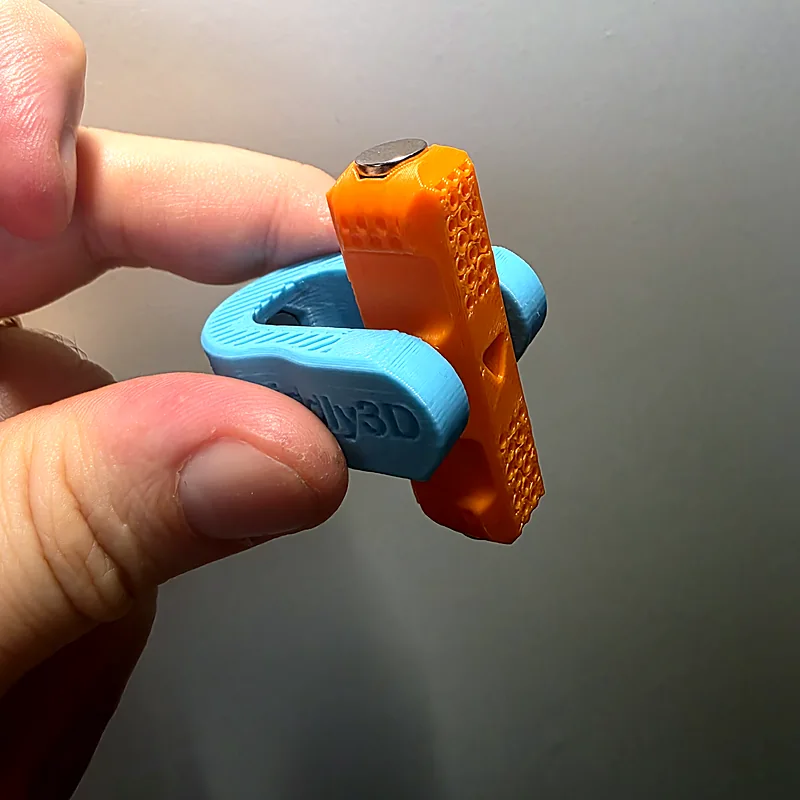
- Fine layer lines. Run a fingernail over the side and you can feel them. They are the fingerprint of the process, not a flaw.
- A small seam. Each layer has to start somewhere, so you may spot a faint vertical line where the layers begin and end.
- Slight colour differences. Filament colour can vary a little from spool to spool, so two spinners in the same colour may not match exactly.
- A short break-in. A fresh print can feel slightly stiff. We free every pivot before it ships, and it gets smoother as you flip it.
Looking after PLA
- Keep it out of hot cars, off radiators and out of strong summer sun behind glass. PLA softens at about 55 °C.
- Wipe it with a slightly damp cloth. No dishwasher and no solvents.
- Our pen cups, trays and bowls are for desk things, not food. Printed layers have tiny grooves that are hard to clean.
For magnet warnings and age advice, see Safety & care.